
Introduction
Imagine walking out of your home one morning, coffee in hand, only to discover that your vehicle is gone. No broken glass. No note. Just an empty parking spot.
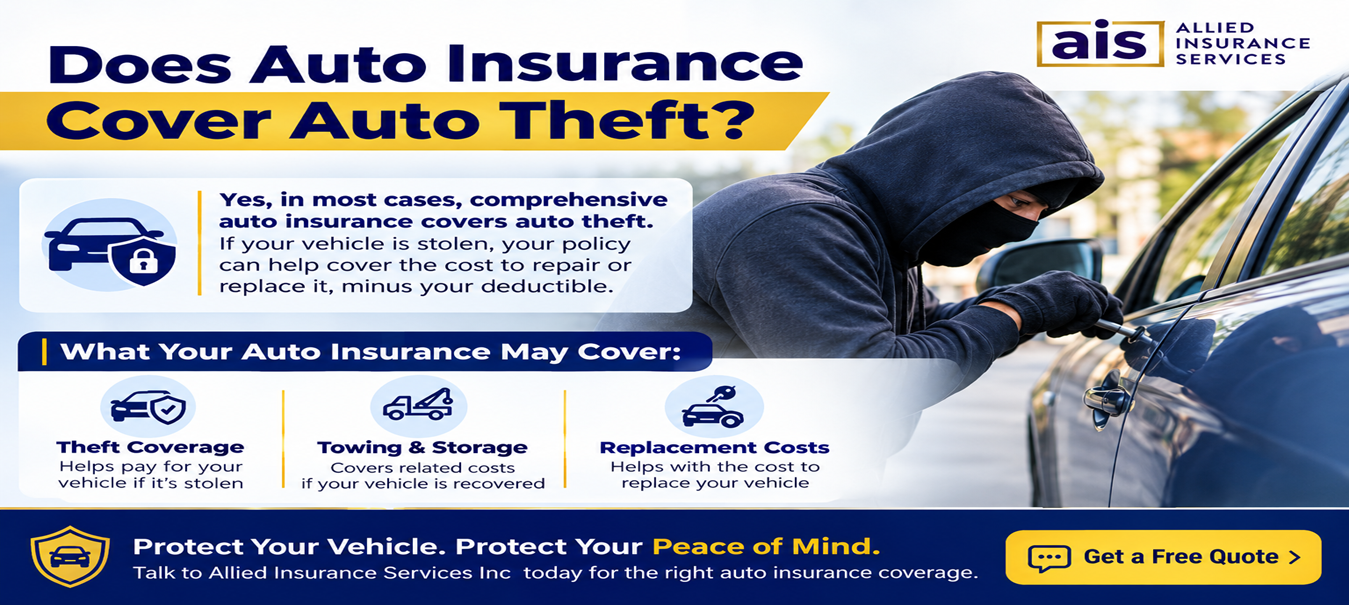
Vehicle theft has become a growing concern across Canada, with many provinces reporting increases in stolen vehicles over recent years. As a result, one of the most common questions drivers ask is, "Does auto insurance cover auto theft?"
The answer is yes—but only if you have the right type of coverage.
Many Canadians assume that every auto insurance policy automatically covers theft. Unfortunately, that's not always the case. Coverage depends on your policy type, the circumstances surrounding the theft, and any endorsements you've added.
In this guide, we'll explain how auto theft coverage works, what's covered, what's excluded, how to file a claim, and practical steps you can take to reduce your risk.
Does Auto Insurance Cover Auto Theft?
Quick Answer
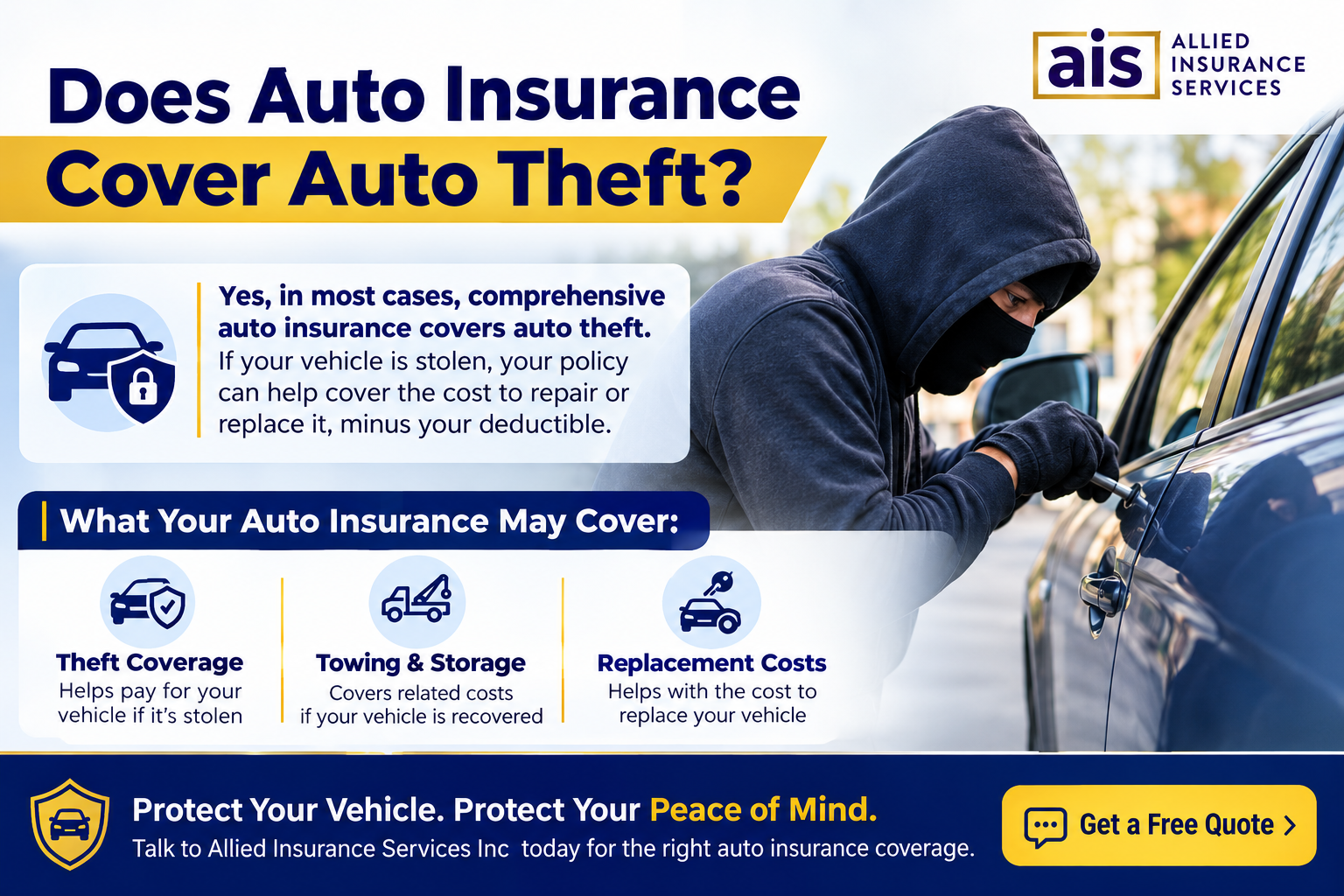
Yes, auto insurance can cover vehicle theft, but typically only if you carry comprehensive coverage or an all-perils policy.
Basic mandatory auto insurance generally does not cover theft of your own vehicle.
If your vehicle is stolen and you only have liability coverage, you may have to absorb the loss yourself.
Coverage That Usually Protects Against Theft
The following types of coverage often include theft protection:
Comprehensive coverage
All-perils coverage
Specified perils coverage (if theft is listed)
Certain custom endorsements
Always review your policy wording to understand exactly what protection is included.
Understanding Comprehensive Coverage
What Is Comprehensive Coverage?
Comprehensive coverage protects your vehicle against losses that aren't caused by a collision.
Examples include:
Theft
Attempted theft
Vandalism
Fire
Falling objects
Windstorms
Hail damage
Flooding
Animal impacts in some situations
For most Canadians, comprehensive coverage is the primary protection against auto theft.
Why Comprehensive Coverage Matters
Without comprehensive coverage, a stolen vehicle may not be covered under your policy.
For newer vehicles, financed vehicles, or high-value vehicles, comprehensive coverage is often highly recommended.
What Happens If Your Vehicle Is Stolen?
If your vehicle is stolen, your insurer will typically investigate the claim before issuing payment.
The Typical Claims Process
Step 1: Contact Police Immediately
Report the theft as soon as possible.
Provide details such as:
Vehicle make and model
License plate number
VIN (Vehicle Identification Number)
Last known location
Time the vehicle was last seen
Step 2: Notify Your Insurance Company
Most insurers require prompt reporting.
Be prepared to provide:
Police report number
Vehicle details
Description of circumstances
List of items inside the vehicle
Step 3: Investigation Period
Insurers often wait a specified period to determine whether the vehicle can be recovered.
This period varies depending on the insurer and province.
Step 4: Settlement
If the vehicle is not recovered, your insurer may compensate you based on:
Actual cash value (ACV)
Replacement cost endorsement (if applicable)
Policy terms and conditions
How Much Will Insurance Pay for a Stolen Vehicle?
Actual Cash Value
Most policies pay the vehicle's actual cash value.
This means the insurer considers the following:
Age of the vehicle
Mileage
Condition
Depreciation
Market value
For example:
If your vehicle was worth $25,000 before the theft, the insurer may offer a settlement close to its current market value, minus any deductible.
Replacement Cost Coverage
Some insurers offer endorsements that provide replacement cost coverage.
This coverage may allow you to:
Replace your vehicle with a similar new model
Avoid depreciation deductions
Receive a higher settlement
These endorsements are often available for newer vehicles.
Does Auto Insurance Cover Items Stolen From Your Vehicle?
This is where many Canadians become confused.
Personal Belongings Usually Aren't Covered by Auto Insurance
Items such as:
Laptops
Smartphones
Wallets
Cameras
Clothing
Sports equipment
are often excluded from auto insurance coverage.
Where Home Insurance May Help
In many cases, stolen personal belongings may be covered under your home insurance policy or tenant insurance policy.
For example:
If someone breaks into your vehicle and steals a laptop, your home insurance policy may provide coverage, subject to deductibles and limits.
This is one reason it's important to understand how auto insurance and home insurance work together.
What Is Not Covered in Auto Theft Claims?
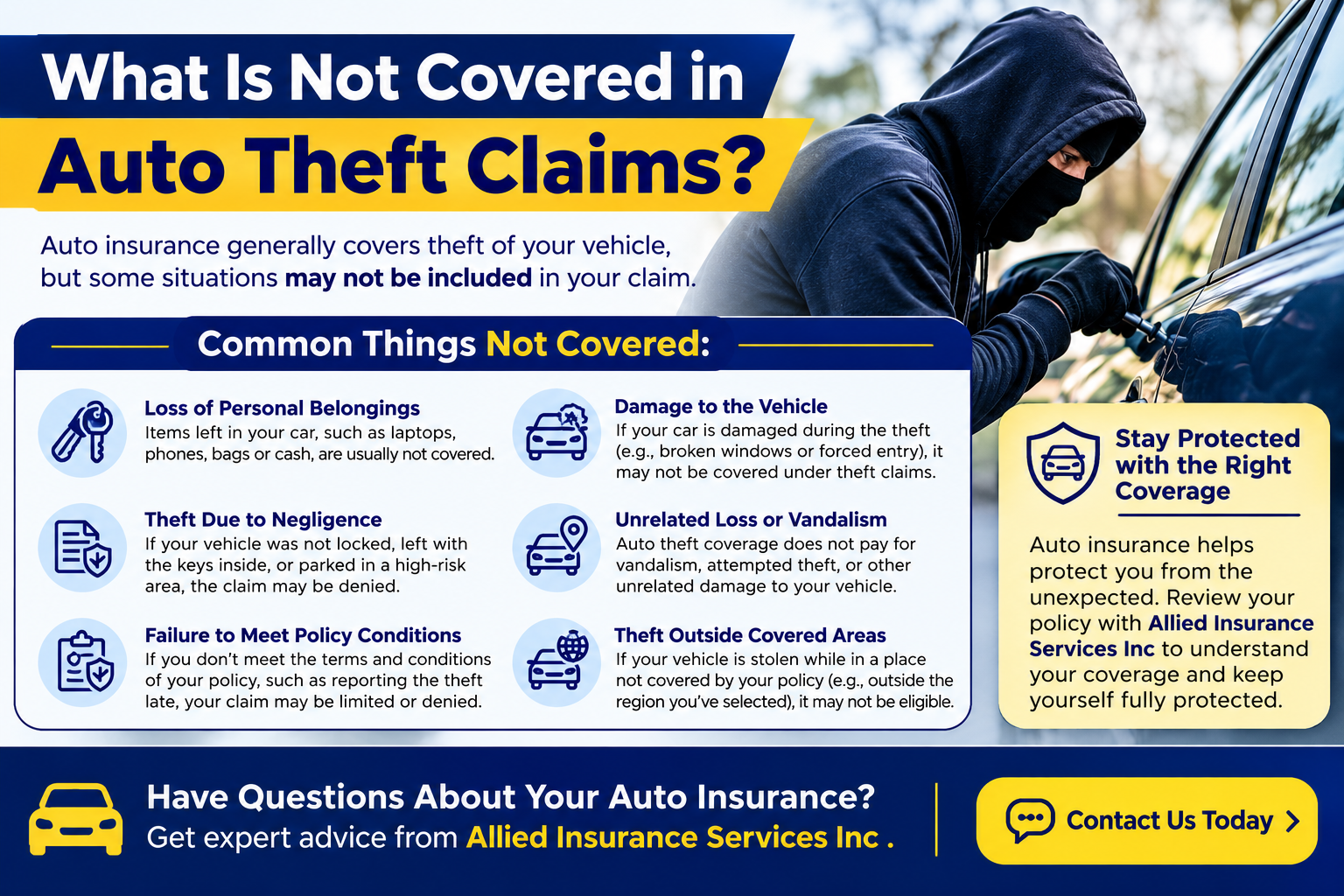
Not every theft-related situation is automatically covered.
Common exclusions may include:
Fraud or Misrepresentation
If false information is provided during the application or claim process, coverage may be denied.
Intentional Acts
Insurance does not cover intentional losses caused by the policyholder.
Unapproved Drivers
Some claims may be affected if an unauthorized driver were using the vehicle.
Leaving Keys Inside the Vehicle
While not always an automatic denial, leaving keys inside may complicate a claim investigation.
Theft of Uninsured Accessories
Certain aftermarket upgrades may require additional coverage.
Examples include:
Custom rims
Specialized audio systems
Expensive modifications
Auto Theft Trends in Canada
Vehicle theft remains a significant issue across Canada.
Criminals often target the following:
Luxury SUVs
Pickup trucks
High-demand vehicles
Vehicles with keyless entry systems
Popular theft methods include:
Relay attacks
Key fob cloning
Reprogramming devices
Organized export theft operations
Understanding these risks can help vehicle owners take preventative action.
How to Reduce the Risk of Vehicle Theft
Insurance is important, but prevention is even better.
1. Use a Steering Wheel Lock
Visible anti-theft devices often discourage criminals.
2. Install a GPS Tracking System
Tracking devices can help authorities recover stolen vehicles.
3. Park in Secure Areas
Whenever possible:
Use locked garages
Choose well-lit parking lots
Avoid isolated locations
4. Store Key Fobs Securely
Place key fobs inside:
RFID-blocking pouches
Metal containers
Signal-blocking boxes
This helps prevent relay attacks.
5. Never Leave Valuables Visible
Visible belongings can attract thieves.
Always remove or conceal:
Electronics
Bags
Tools
Personal items
6. Keep Vehicle Software Updated
Modern vehicles often receive security updates that improve theft prevention systems.
Does Financing or Leasing Affect Theft Coverage?
Financed Vehicles
Lenders frequently require comprehensive coverage as part of the financing agreement.
This protects both you and the lender if the vehicle is stolen.
Leased Vehicles
Lease agreements commonly require the following:
Comprehensive coverage
Collision coverage
Specific deductibles
Failing to maintain required coverage could violate your lease contract.
Should You Add Comprehensive Coverage?
For many Canadian drivers, the answer is yes.
Comprehensive coverage may be worth considering if:
Your vehicle has significant value
You live in a high-theft area
Your vehicle is commonly targeted by thieves
You rely on your vehicle daily
Your vehicle is financed or leased
The cost of comprehensive coverage is often modest compared to the financial impact of replacing a stolen vehicle.
Auto Insurance vs Home Insurance: Understanding the Difference
Many people mistakenly assume all theft losses fall under auto insurance.
In reality:
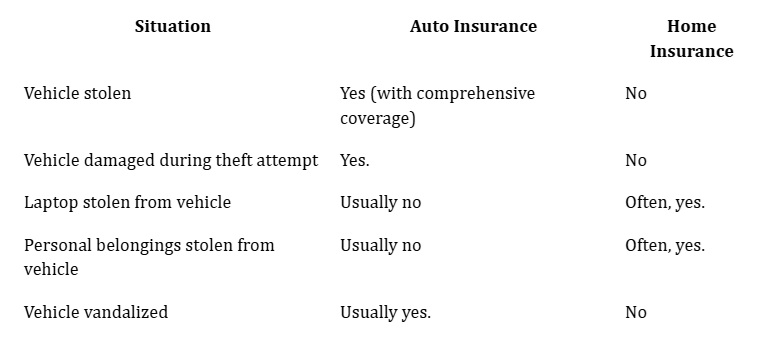
Understanding these distinctions can help prevent surprises during the claims process.
Common Mistakes to Avoid After a Vehicle Theft
Delaying the Police Report
Prompt reporting improves your chances of recovery and supports your insurance claim.
Forgetting Documentation
Keep records of:
Purchase receipts
Maintenance records
Vehicle photos
Modification receipts
Posting Details on Social Media
Sharing sensitive details publicly may interfere with investigations.
Assuming Everything Is Covered
Review your policy carefully to understand limits, exclusions, and deductibles.
Frequently Asked Questions
Does auto insurance cover stolen vehicles in Canada?
Yes, if your policy includes comprehensive coverage, all-perils coverage, or another theft-inclusive endorsement.
Will insurance pay if my car is never recovered?
In most cases, yes. After the investigation period, your insurer may compensate you based on the vehicle's actual cash value or applicable replacement cost coverage.
Does auto insurance cover theft of personal belongings?
Generally no. Personal belongings are often covered under home insurance or tenant insurance policies instead.
What is the deductible for vehicle theft claims?
The deductible depends on your specific policy. It will typically be deducted from your settlement amount.
Can a claim be denied if I left my keys in the vehicle?
Possibly. While not always an automatic denial, it may affect the insurer's investigation and claim decision.
Does comprehensive coverage include attempted theft damage?
Yes. Damage caused during an attempted theft is commonly covered under comprehensive coverage.
Are stolen vehicle upgrades covered?
Only if they are included in your policy coverage or endorsed separately.
Conclusion
So, does auto insurance cover auto theft?
The answer is yes—but only when the appropriate coverage is in place. Comprehensive coverage, all-perils coverage, and certain endorsements can protect you financially if your vehicle is stolen.
Without theft coverage, replacing a stolen vehicle can create a significant financial burden. That's why it's important to review your policy regularly, understand your coverage limits, and take proactive steps to reduce the risk of theft.
Remember that while auto insurance generally protects the vehicle itself, your home insurance policy may help cover personal belongings stolen from the vehicle. Together, these coverages can provide broader protection and greater peace of mind.
Need Help Reviewing Your Coverage?
If you're unsure whether your current auto insurance policy protects against theft, speak with a licensed insurance professional. A coverage review can help identify gaps, explain available options, and ensure you have the protection you need before a theft occurs—not after.