
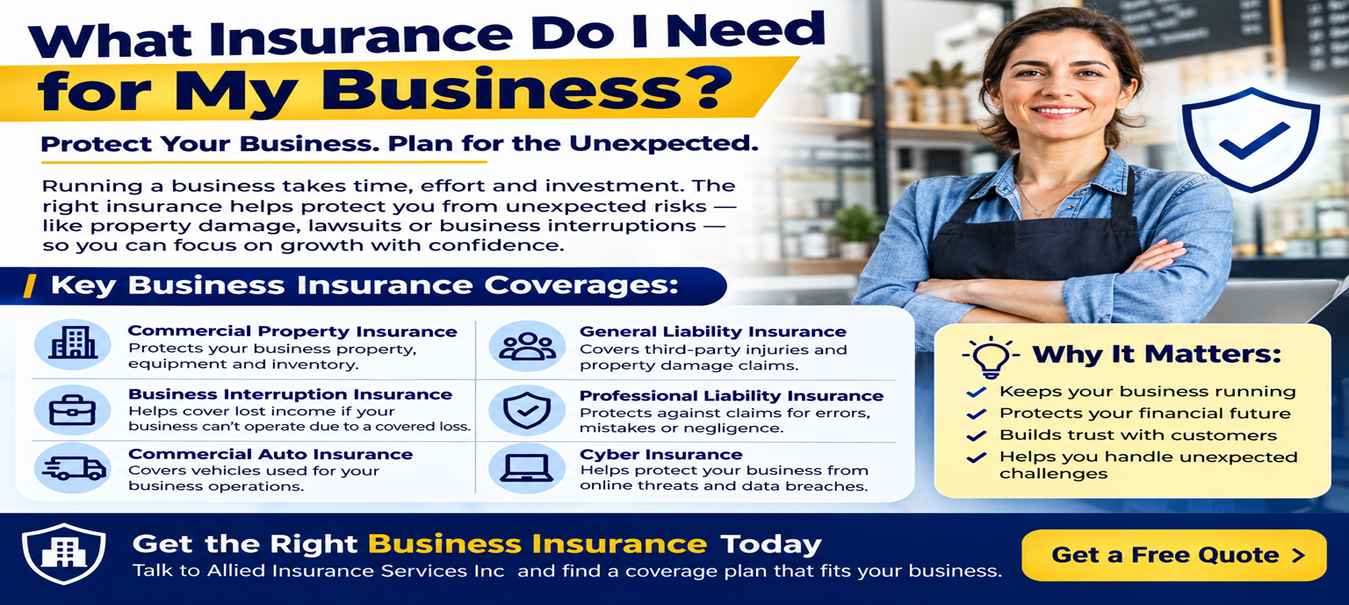
Starting or running a business comes with plenty of decisions. You think about customers, employees, equipment, suppliers, rent, marketing, and cash flow. Insurance may not be the most exciting part of running a business, but it can become one of the most important when something goes wrong.
A common question we hear from business owners is: “What insurance do I actually need for my business?”
There isn't one policy that works for every company. A contractor working at customer properties has different risks from a retail store. A consultant working from a home office has different concerns from a restaurant, manufacturer, or delivery company.
The right business insurance starts with understanding how your company operates, what you own, who you serve, and what could realistically go wrong.
Why Does a Business Need Insurance?
Imagine you run a small business and a customer visits your location. They slip on a wet floor and are injured.
Or perhaps a fire damages your equipment and inventory. Maybe a customer claims that your professional advice caused them a financial loss. Or one of your company vehicles is involved in an accident while making a delivery.
These situations can create significant expenses.
Business Insurance can help protect your company against certain covered losses, depending on the policy, limits, deductibles, conditions, and exclusions.
Insurance isn't about expecting something bad to happen. It's about making sure one unexpected event doesn't put everything you've built at risk.
What Insurance Does a Small Business Usually Need?
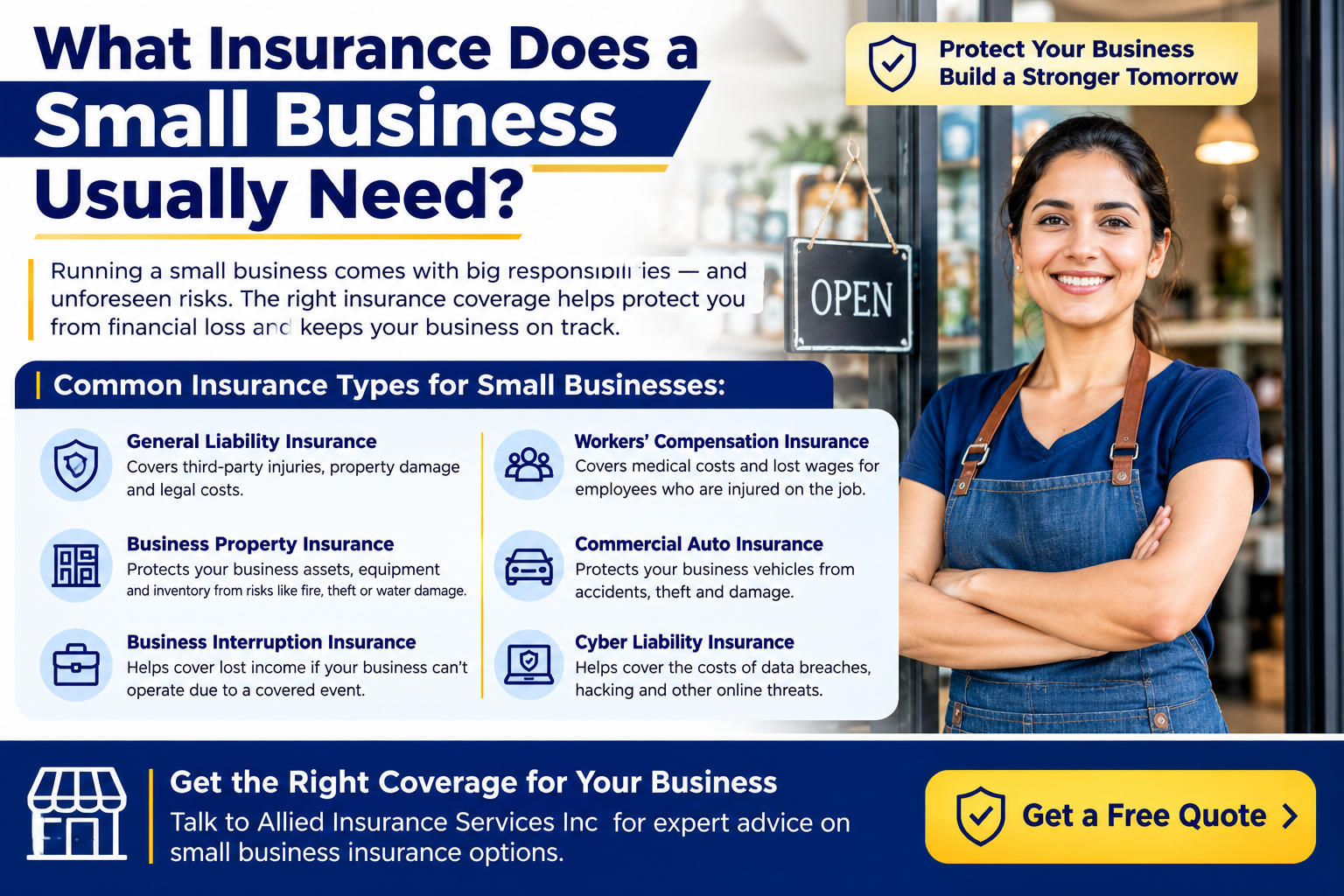
The answer depends on your industry and circumstances, but several types of coverage are commonly considered by business owners.
1. Commercial General Liability Insurance
Commercial General Liability, often called CGL, is one of the most common forms of business coverage.
It can help address certain claims involving third-party bodily injury, property damage, and other liability exposures, subject to the policy terms.
For example, imagine a customer visits your shop, slips near the entrance, and claims your business was responsible for the injury.
Or you're a contractor and accidentally damage a customer's property while working.
A liability policy may respond to an eligible claim and related legal expenses, depending on the circumstances and coverage.
For many businesses, liability protection is a basic starting point.
2. Commercial Property Insurance
If your business owns or leases physical property, commercial property coverage may be worth considering.
It can be designed to protect eligible business property against covered risks.
Depending on the policy, this could include:
Buildings
Equipment
Furniture
Inventory
Tools
Computers
Business contents
Certain improvements and betterments
Consider a small retail store that suffers a fire. Even if the business can eventually reopen, replacing inventory, equipment, fixtures, and other property can be expensive.
Commercial property coverage may help with eligible losses according to the policy.
3. Business Interruption Insurance
Protecting physical property is only part of the equation.
What happens if your business has to temporarily close because of a covered loss?
You may still have rent, salaries, loan payments, utilities, and other ongoing expenses while revenue drops.
Business interruption coverage may help replace certain lost income or cover eligible continuing expenses following an insured loss, subject to the policy wording.
For example, a restaurant experiences a covered fire and needs several months to complete repairs. The building and equipment may be insured, but the owner also needs to think about the income the restaurant isn't generating during the closure.
That's where business interruption coverage can become particularly valuable.
4. Professional Liability Insurance
Not every business risk involves physical damage.
If your business provides advice, professional services, designs, recommendations, or specialized expertise, professional liability may be important.
A client could claim that an error, omission, or professional mistake caused them financial harm.
For example, imagine an accounting professional makes an error that results in a client's financial loss. Or a consultant provides advice that a client later claims caused damage to their business.
Professional Liability Insurance can help address eligible claims arising from covered professional services, depending on the policy.
This type of coverage is particularly relevant for many consultants, accountants, designers, technology professionals, engineers, and other service providers.
5. Commercial Auto Insurance
If your business owns or uses vehicles for business purposes, personal Auto Insurance may not be appropriate for every situation.
Commercial Auto Insurance is designed for vehicles used in connection with business activities.
You may need to consider it if your company has:
Delivery vehicles
Work vans
Company cars
Service vehicles
Trucks
Multiple business vehicles
Vehicles used by employees for business purposes
For example, a plumbing company may have several vans carrying employees, tools, and equipment to customer locations.
The way those vehicles are used should be properly disclosed to the insurer.
Using a vehicle for business without appropriate coverage can create serious problems if an accident occurs.
6. Cyber Insurance
Many businesses rely heavily on computers, online systems, cloud services, customer databases, and electronic payments.
That creates another category of risk.
A cyber incident could involve stolen information, ransomware, a compromised system, or a data breach.
Cyber Insurance may provide certain types of coverage for eligible cyber-related losses, depending on the policy.
It may be worth discussing if your business stores customer information, processes online transactions, or relies heavily on technology to operate.
7. Equipment Breakdown Insurance
What would happen if an important piece of equipment suddenly failed?
For some businesses, equipment isn't just convenient—it is essential to generating revenue.
Restaurants, manufacturers, contractors, workshops, and other businesses may depend on specialized equipment.
Equipment breakdown coverage can address certain sudden and accidental mechanical or electrical breakdowns, subject to the policy.
For a business that relies on refrigeration, machinery, production equipment, or specialized systems, this can be an important conversation.
8. Commercial Crime Insurance
Businesses can face losses caused by theft, fraud, employee dishonesty, or other criminal activity.
Commercial crime coverage can provide protection for certain types of covered losses.
For example, imagine an employee has unauthorized access to company funds and misappropriates money over time.
The appropriate crime coverage may help address eligible losses, depending on the policy and circumstances.
9. Directors and Officers Liability
If your company has directors or officers, particularly within a corporation, you may want to discuss Directors and Officers Liability Insurance.
Directors and officers can face allegations related to management decisions and their responsibilities.
This coverage is more specialized, but for some organizations it can be an important part of a broader risk management strategy.
What About Home-Based Businesses?
Running a business from home doesn't automatically mean your regular Home Insurance will cover all business activities.
This is a common misunderstanding.
Suppose you operate an online business from your home and keep $20,000 of inventory in your garage.
Your standard Home Insurance policy may not provide the business coverage you assume it does.
The same applies if customers regularly visit your home, you have employees working there, or you use expensive business equipment.
If you operate a home-based business, tell your insurance professional exactly what you do.
What About Condo Owners Who Run a Business?
A similar issue can arise when a business is operated from a Condo.
Condo Insurance is designed around personal residential risks and may not automatically provide the business protection you need.
For example, if you run a consulting business from your condo and store business equipment or client information there, your commercial insurance needs should be reviewed separately.
Don't assume your personal Condo Insurance will automatically cover your business activities.
How Much Business Insurance Do You Need?
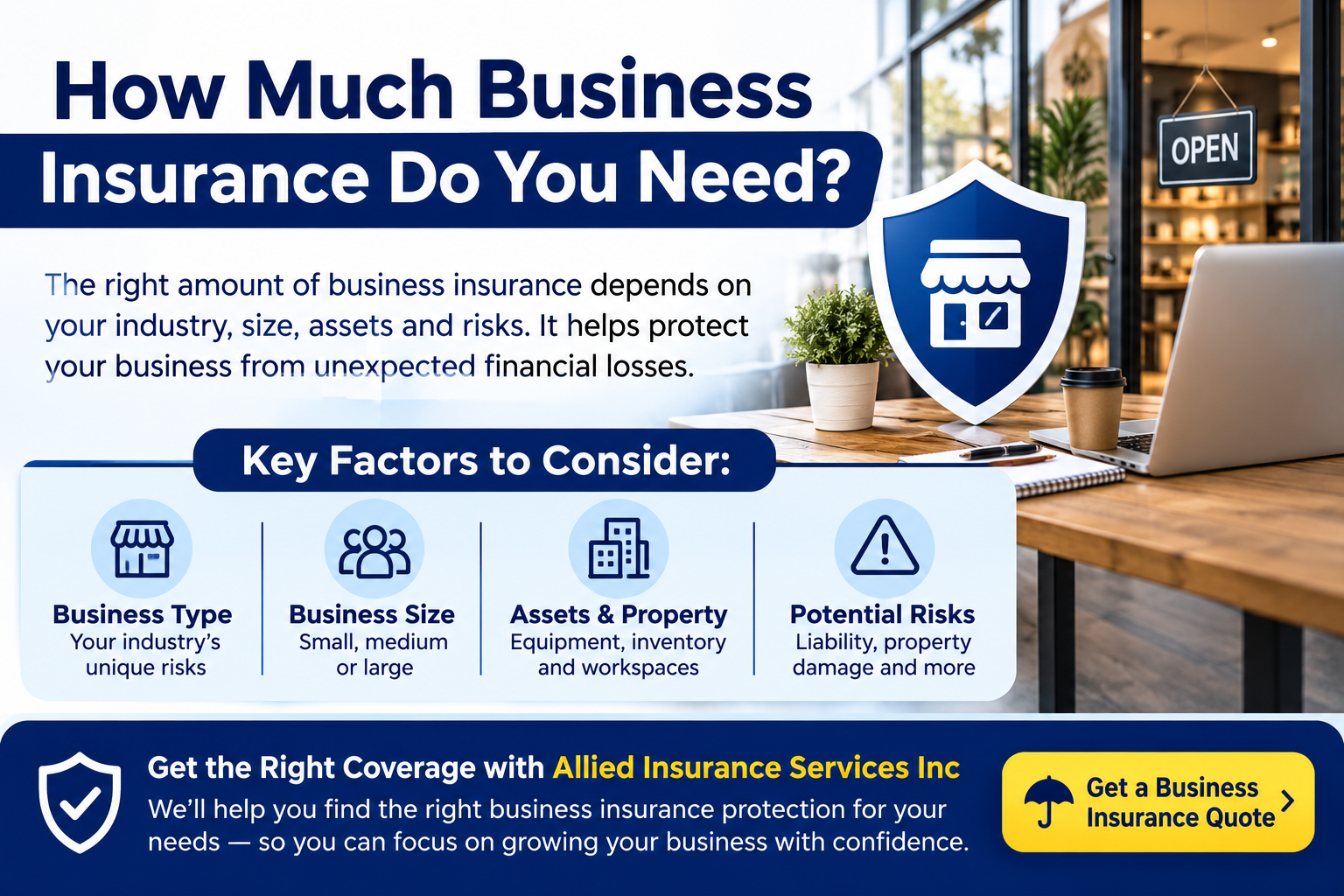
This is where things become more personal.
There's no universal number that every business should carry.
Your insurance needs can depend on:
Industry
Revenue
Number of employees
Property value
Inventory
Equipment
Contracts
Number of customers
Business vehicles
Professional services
Cyber exposure
Location
Potential liability
Business interruption risks
A small contractor and a technology consulting firm may both have five employees, but their insurance needs can be completely different.
The goal isn't to buy the biggest policy possible. It's to identify meaningful risks and choose coverage limits that make sense for your business.
A Practical Example
Let's say Mike owns a small electrical contracting company.
He has three employees, two service vans, tools worth approximately $60,000, and regularly works inside customers' homes and commercial properties.
His insurance discussion might include:
Commercial General Liability
Commercial Auto Insurance
Tools and equipment coverage
Property coverage
Employee-related risks
Business interruption
Contractual insurance requirements
Now compare that with Sarah, who operates a marketing consultancy from a small office.
Her priorities may be very different. Professional Liability, General Liability, Cyber Insurance, office contents, and other business-specific coverage may be more relevant.
This is why simply searching for the “best business insurance” isn't enough. Your coverage should reflect how your business actually operates.
Common Business Insurance Mistakes
Assuming General Liability Covers Everything
General Liability is valuable, but it doesn't automatically cover every risk a business can face.
Property, professional errors, cyber incidents, vehicles, employee risks, and business interruption may require separate coverage or endorsements.
Forgetting to Update Your Policy
Businesses change.
You may buy new equipment, hire employees, move locations, add vehicles, expand services, or sign new contracts.
Tell your insurance professional when something significant changes.
Choosing Coverage Based Only on Price
A lower premium isn't necessarily a better deal if important coverage is missing.
When comparing policies, look at coverage, limits, deductibles, exclusions, conditions, and service—not just the monthly cost.
Assuming a Home Policy Covers a Business
If you work from home, don't assume your personal Home Insurance provides adequate business protection.
Not Reviewing Contracts
Some landlords, clients, contractors, or suppliers may require specific insurance limits or certificates.
Review those requirements with your insurance professional before signing a contract.
Tips for Choosing Business Insurance
Before arranging coverage, make a simple list of everything your business depends on.
Think about:
People: Who works for you?
Property: What equipment, inventory, tools, or premises do you rely on?
Vehicles: Do you use vehicles for business?
Customers: Do people visit your premises or do you work at their locations?
Advice: Could a professional mistake cause a client's financial loss?
Technology: What happens if your systems or data are compromised?
Income: How long could your business survive without revenue?
Once you've identified these areas, your insurance professional can help determine which types of coverage deserve attention.
Frequently Asked Questions
What insurance is legally required for a business?
Requirements can vary depending on your business structure, industry, location, employees, vehicles, contracts, and other factors. Some coverage may be required by law or contract, while other insurance is optional but still valuable.
Is General Liability Insurance enough for a small business?
Not necessarily. General Liability addresses certain third-party liability risks, but it doesn't automatically cover property damage to your own business assets, professional errors, cyber incidents, commercial vehicles, or every other business risk.
Do I need Commercial Auto Insurance?
If vehicles are used for business purposes, Commercial Auto Insurance may be appropriate. The correct coverage depends on how the vehicles are owned and used.
Does Home Insurance cover my home-based business?
Not necessarily. Personal Home Insurance is primarily designed for residential risks. Business activities, equipment, inventory, and liability may require separate business coverage.
Do consultants need business insurance?
Many consultants should consider General Liability and Professional Liability Insurance, depending on their services and contractual requirements. Cyber coverage may also be worth discussing if they handle sensitive client information.
What insurance does a small business need?
There isn't one standard package. Common options include General Liability, Commercial Property, Business Interruption, Professional Liability, Commercial Auto, Cyber, and other specialized coverage depending on the business.
How often should I review my business insurance?
Review your coverage whenever your business changes significantly and consider having a regular annual review. New employees, equipment, locations, vehicles, services, contracts, and revenue can all affect your insurance needs.
Can Allied Insurance Services Inc. help me determine what coverage I need?
Yes. An insurance professional can review how your business operates, identify common exposures, discuss available coverage options, and help you make informed decisions about your insurance needs.
Protecting the Business You've Worked Hard to Build
There isn't a magic business insurance package that works for everyone.
The right coverage depends on what your company does, what you own, who you work with, and the risks that could have the biggest financial impact.
For one business, Commercial General Liability may be the starting point. Another may need Professional Liability, Commercial Auto, Cyber Insurance, or significant property and business interruption protection.
The best place to start is with an honest conversation about how your business actually works.
Allied Insurance Services Inc. can help you review your risks and understand your insurance options without making the process unnecessarily complicated. Whether you're starting a small business or an established company is expanding, taking time to review your coverage can help you protect what you've built and prepare for the unexpected.